
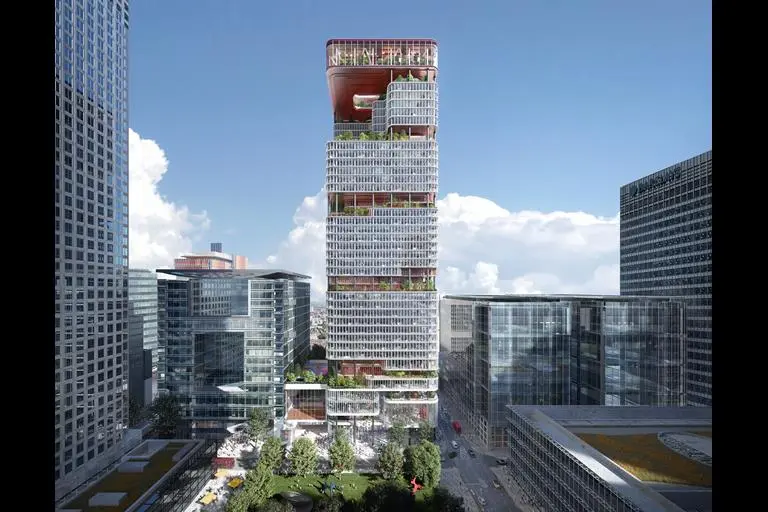
KPF’s HSBC Tower: A Revamp That Redraws the Skyline’s Intent
The proposed transformation of HSBC’s tower at Canary Wharf marks a shift in how London’s corporate architecture is being reimagined. KPF’s plan — now moving a step forward — includes converting the upper levels of the building into a hotel, introducing a new layer of public‑facing activity into a structure originally conceived as a sealed corporate monolith.
It is a familiar story in global cities: towers built for a single purpose are being asked to host multiple lives. Commercial demand changes, work patterns evolve, and the skyline adapts accordingly. What once symbolised financial power is now being reframed as mixed‑use vertical infrastructure.
The move is not simply functional. It signals a broader recalibration of Canary Wharf itself — a district negotiating its identity beyond the logic of the office block. Hotels, residential units, cultural spaces and hybrid programmes are gradually softening the edges of an area long defined by efficiency and repetition.
KPF’s intervention sits within this transition. The tower’s upper floors, historically inaccessible, could become a vantage point open to a different kind of presence: travellers, temporary residents, people who experience the city without belonging to its corporate rhythms.
It is an architectural gesture that acknowledges a changing reality: buildings are no longer monuments to a single narrative. They are containers of shifting uses, economic cycles, and new forms of urban life.
