
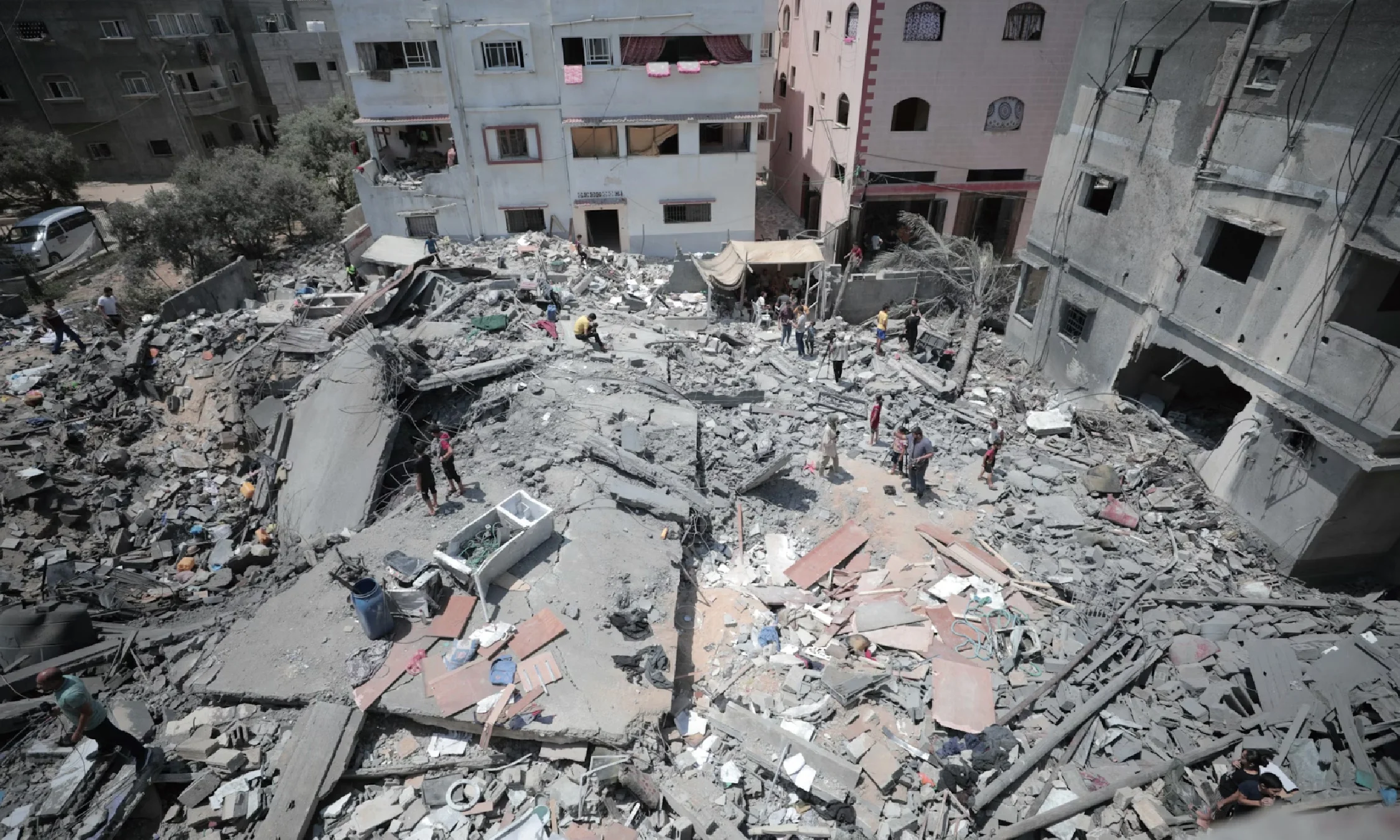
Gaza, almost two months after the truce: a silence that is not peace.
When the world press celebrated the signing of the ceasefire, headlines spoke of a “pause” and—in some cases—of “hope” for a new phase. Many wondered whether, after months of bombing and destruction, the conflict could truly end and transform into peace. Today, nearly two months after the agreement, the picture shows how that distinction is more subtle and painful than the headlines suggested: the war, in the broadest sense of the term, is suspended, but the violence has not disappeared, and the truce has become a minefield of incidents, localized raids, demolitions, and civilian casualties, among them still children.
The crucial question remains: is a truce without real security, without reconstruction, and without justice already peace?
The numbers released by the Gaza authorities offer a first clue: hundreds of alleged ceasefire violations, hundreds of civilians killed, and thousands injured in the days following the agreement. These figures are reported and reiterated by local offices and international media and must be read carefully due to the difficulty of verifying in conflict zones. However, their repeated convergence indicates that the truce has not eliminated deaths or suffering. International organizations and some news agencies document Israeli operations that have continued to target sensitive areas, as well as raids and the dismantling of civilian structures, while the civilian population continues to complain of limited access to aid and severe logistical difficulties in beginning any sustainable reconstruction.
The concept of a “truce that is not peace” is dramatically brought to life by individual cases, stories that speak louder than any dossier. A few days ago, an episode moved and outraged: two young brothers, Fadi and Goma Abu Assi, aged 11 and 8, were killed by a missile or drone strike while collecting firewood for their wheelchair-bound father, east of Khan Younis. The simple and unmistakable horror of the testimony of the only relative present is contained in words that require no rhetoric: “They were children… what had they done?” an uncle said at the funeral, reconstructing a scene that blurs any distinction between statistics and human lives. Testimonies like that of the Abu Assi family arrive almost daily from hospital wards and basements used as shelters: faces, names, ages—and a snapshot of a daily life that remains dangerous despite the truce.
On the opposite side of the conflict’s geography, the West Bank has been experiencing an escalation for weeks that has also led to heavy international protests: videos filmed by observers and released by NGOs show two men killed in a raid in Jenin while they appeared to have surrendered, with their hands raised or on their knees. Those images sparked public condemnation and calls for an investigation: the UN and human rights groups called the incident “disconcerting,” raising the prospect of summary executions and fueling questions about the legality of the rules of engagement. Israeli authorities cited the alleged military affiliations of the deceased and the complex operational context, but the weight of the images and the families’ recriminations forced the international community, human rights observers, and the media to make a serious reflection: the Gaza truce has not defused a broader climate of violence that continues to generate victims even far from the Strip.
Adding to the concern is the daily repetition of incidents that local authorities dismiss as “targeted operations” or “security activities,” yet which leave the population with the impression of an occupation that is far from over. The reported acts—direct fire into residential neighborhoods, incursions beyond temporary lines, home demolitions, arbitrary detentions—are not simply tactical incidents: they are practices that erode daily trust and make any concrete plan for a return to normalcy impossible. While conventional warfare is less visible, the daily pressure remains, and reconstruction becomes a mirage if minimum safety for workers, technicians, and materials is not first guaranteed.
The testimonies collected in recent days by humanitarian organizations reflect the human urgency that numbers cannot fully convey. A mother, who took refuge with her children in a school transformed into a reception center, describes the fear of every siren that still forces her to drag her family from one shelter to another; a health worker describes the struggle to find medicines and fuel to generate electricity and maintain basic healthcare functions; a volunteer for an international NGO speaks of aid trucks being blocked, partially unloaded, and then waiting days for a “safe route” to be established. These voices depict A framework in which the truce has halted the waves of devastating bombings, but has not eliminated the need for daily protection and uninterrupted access to assistance.
The issue is not merely humanitarian: it is political and strategic. The truce has opened a small and precarious space in which international politics is called upon to decide whether to transform temporary reductions in violence into reconstruction and coherent governance.
This requires—and here the discussion must be concrete, not schematic—ensuring uninterrupted humanitarian access, creating independent and reliable mechanisms for verifying violations and ensuring accountability, establishing a reconstruction plan with tied and monitored funding, and initiating political negotiations to address the fundamental issues: non-state arms control, future administrative status, and fundamental civilian rights. Without these steps, the truce risks remaining a mere parenthesis, leaving in its wake fear, rubble, and potential retaliation.
What implications does all this have for Israel and the region? In Israel, the leadership maintains an approach that combines the need for security with the intention of not completely closing off military options against armed groups or targets deemed sensitive. This attitude justifies, in the government’s eyes, targeted interventions, which, however, fuel international resentment and condemnation when they affect civilians. Regionally, the northern border remains a critical point: Lebanon and the presence of forces like Hezbollah act as triggers for a greater escalation, while diverse international actors—Egypt, Jordan, Gulf countries, and major powers with distinct visions—apply pressure and build partly competing plans for stabilization. The result is a fragile diplomatic architecture that has so far failed to generate credible joint management of the post-truce phase.
What can and must happen now? What is needed is not a list of good intentions, but a roadmap that does not prevaricate. Aid flows must be stabilized and safe corridors must be continuously guaranteed so that reconstruction teams can operate without the constant fear of attacks: this is a prerequisite for restarting local economies and healthcare infrastructures. At the same time, it is essential to establish an international monitoring presence that collects, verifies, and publishes a credible record of violations, with the capacity to attribute responsibility and support requests for reparations. Finally, a serious and committed political commitment to reconstruction is needed: financial resources under transparent conditions, project management with local stakeholders, and guarantees for the safety of workers and supplies. Only in this way can the truce gradually become a solid foundation on which to build broader political processes.
The truce, in short, is a conditional beginning, a period that can become an opportunity or, if neglected, a pause that paves the way for new tensions. The voices of families, the images circulating on social media, and independent reports demonstrate how fragile the daily lives of the population are. Fadi and Goma Abu Assi are not mere statistics: they are two faces that demonstrate how far away peace is if even children are left gathering firewood in a courtyard threatened by the sky. Likewise, the case of the men killed in Jenin—the images and subsequent reactions—shows that the truce has not erased the brutality of the clashes nor the need for clear and respected rules of engagement.
For those observing from the outside, the challenge is simple to state but difficult to implement: transform the truce into real security instruments, transparent reconstruction programs, and concrete political steps. Until this happens, the silence of the bombings will remain a suspended silence, not a solid peace.